

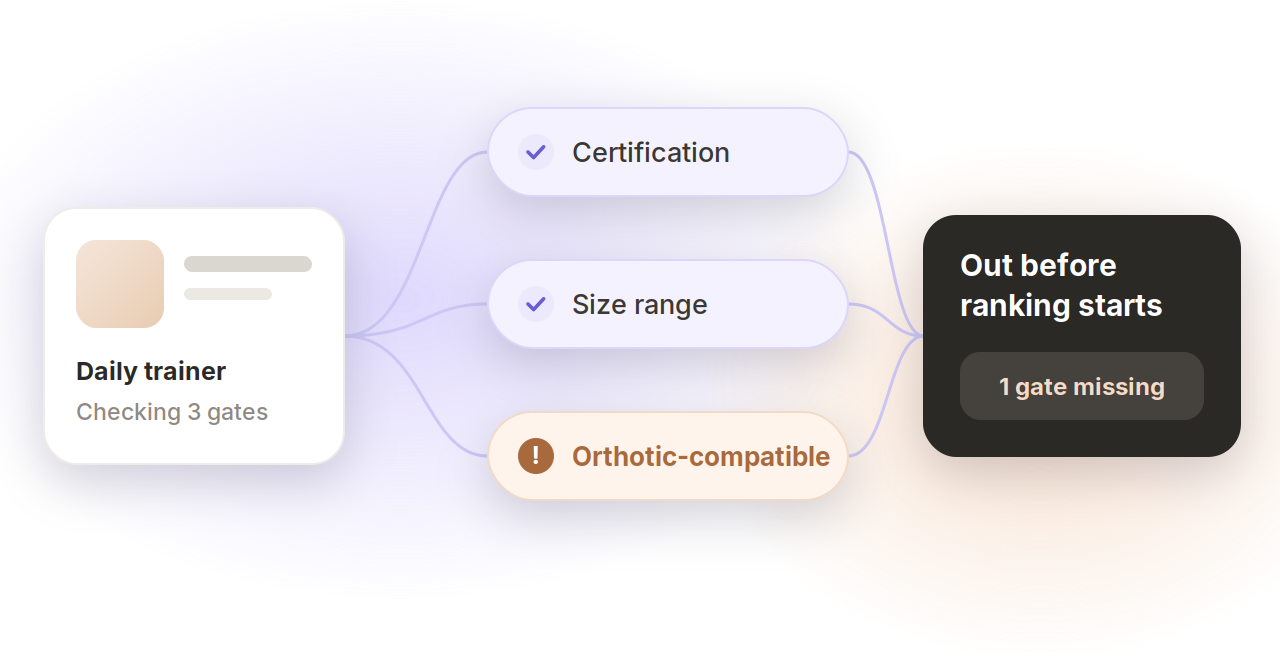
The facts a product must show before AI will consider it at all, such as a certification, a size range or a compatibility claim. Miss one and you're out before ranking starts.
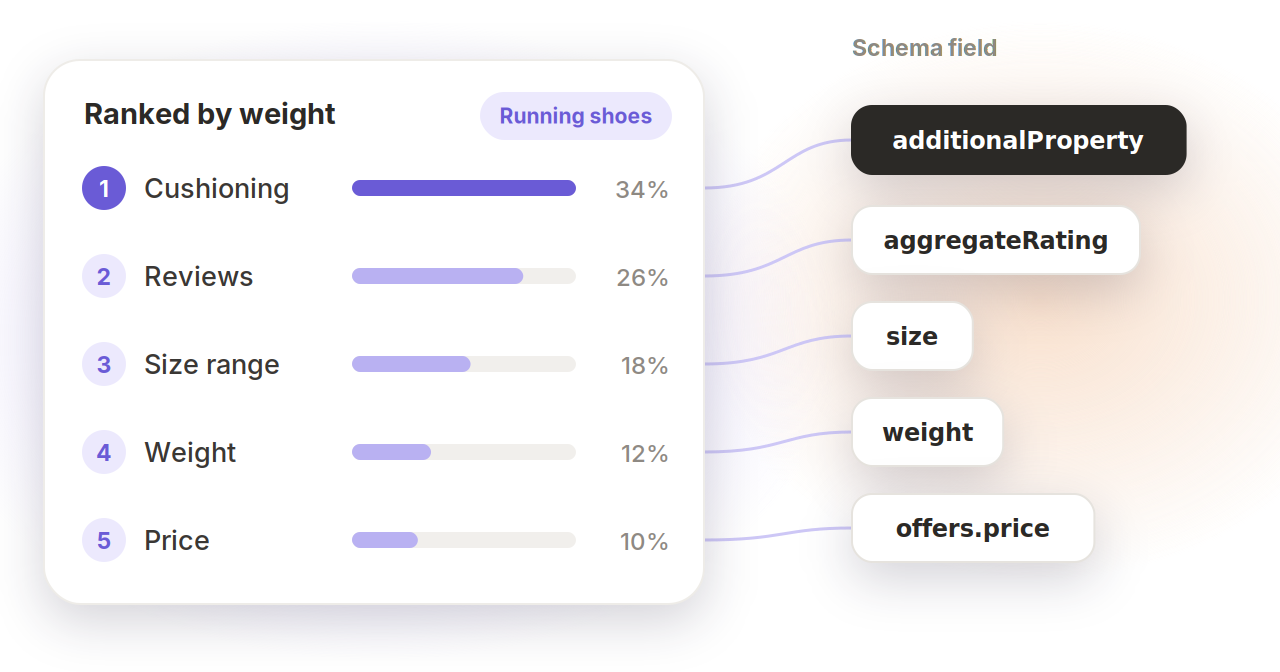
The attributes that decide the winner once a product is eligible, ranked by weight and mapped to the schema field each one belongs in.
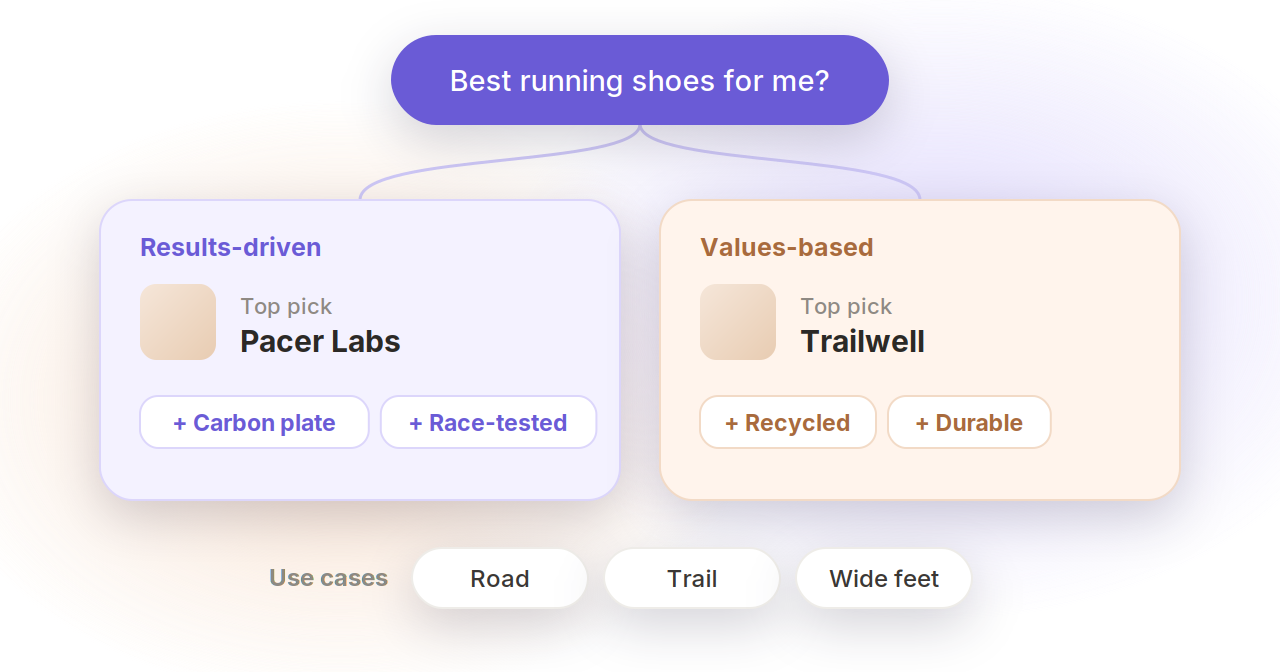
How the model answers differently for a values-driven, results-driven or typical buyer, and for each use case in the category.
Each engine weighs a category differently, and the weights move when a model updates. Novi keeps a strategy per model and flags when an update reshapes your category. Link: the GPT model update analysis guide.
Novi runs AI shopping trials across your categories, models, personas and markets.
We capture every pick, pass, citation and background search the model runs.
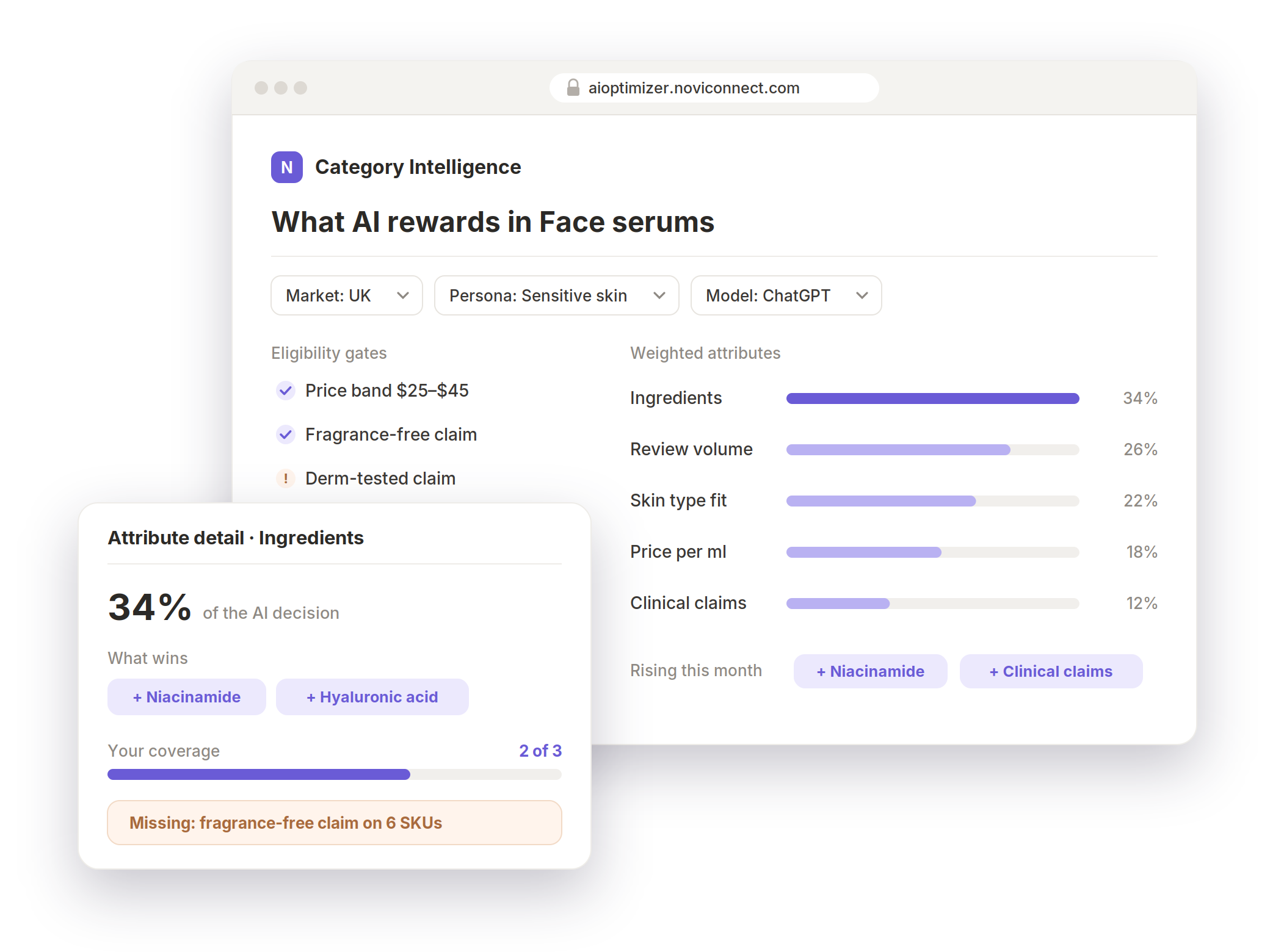
Category Intelligence turns them into a category strategy: gates, weighted attributes, the language the model uses, and the sources it trusts.
Every recommendation in Novi traces back to that strategy, so your teams know why a change matters before they make it.
Novi complements your existing AI visibility tools with category-level intelligence that reveals what drives product recommendations, where your products fall short, and which optimizations matter most.
Talk to salesCategory Intelligence is Novi’s patent-pending approach to understanding how AI models organize and evaluate product categories. It identifies the attributes, language, use cases, and selection signals that influence which products AI recommends.
Prompt tracking measures whether your brand appears in responses to predefined questions. Category Intelligence goes deeper, examining how AI evaluates products within a category, which attributes influence selection, and why certain products are recommended over others.
Novi provides category-level intelligence across ChatGPT, Gemini, Perplexity, and Claude. It examines how each AI engine interprets product categories, evaluates attributes, and determines which products to recommend.
Brands can use Category Intelligence to identify missing product attributes, understand category-specific requirements, and prioritize improvements to product content and structured data. These insights help teams focus on the changes most relevant to how AI evaluates their products.